Racing in Car 2 Review – Apk5Star
Most mobile racing games hand you a bird’s eye view of your car and ask you to steer around a circuit. You watch your vehicle from above or behind, and while that works fine, there is always something missing — the feeling that you are actually the one driving. That sensation, the one where your heart jumps slightly when a truck appears out of nowhere and you barely squeeze past it, is something very few mobile racers manage to recreate. Racing in Car 2 is one of the rare games that gets it right.
The premise is simple. You sit behind the wheel in a fully rendered cockpit, the road stretches ahead of you packed with traffic, and your job is to go as fast as you possibly can without wrecking. No laps, no checkered flags, no circuit to memorize. Just you, a highway, and hundreds of cars standing between you and a high score. It sounds minimal, and in some ways it is — but that simplicity is precisely what makes this Racing in Car 2 review such an interesting one to write, because the game earns its audience through execution rather than feature count.
With over 300 million downloads across Android and iOS, this is not a hidden gem. It is a game that has earned a long-term following by doing one thing extremely well. In this review, I will break down the cockpit view experience, controls, car roster, locations, progression system, and where the game genuinely shines versus where it shows its limits. Whether you are new to it or have been playing for a while, there is plenty worth knowing.
Quick Answer: What Is Racing in Car 2?
Racing in Car 2 is a free-to-play endless traffic racing game available on Android and iOS. The game places the player in a first-person cockpit view inside a detailed car interior, driving through realistic highway traffic at high speed. Players steer using device tilt controls, earn coins by overtaking traffic and driving fast, and use those coins to unlock new cars. The game features multiple locations, a global leaderboard, and an endless game mode with no time limits. It is fully playable offline and is one of the most downloaded mobile racing games, with over 300 million installs worldwide.
The Cockpit View: What Makes Racing in Car 2 Different
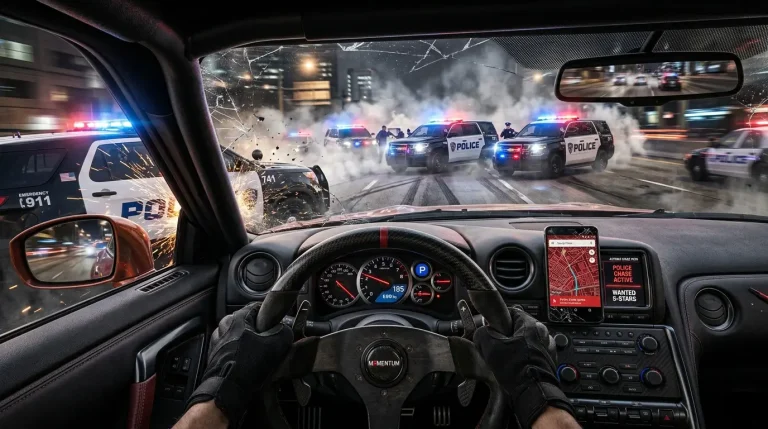
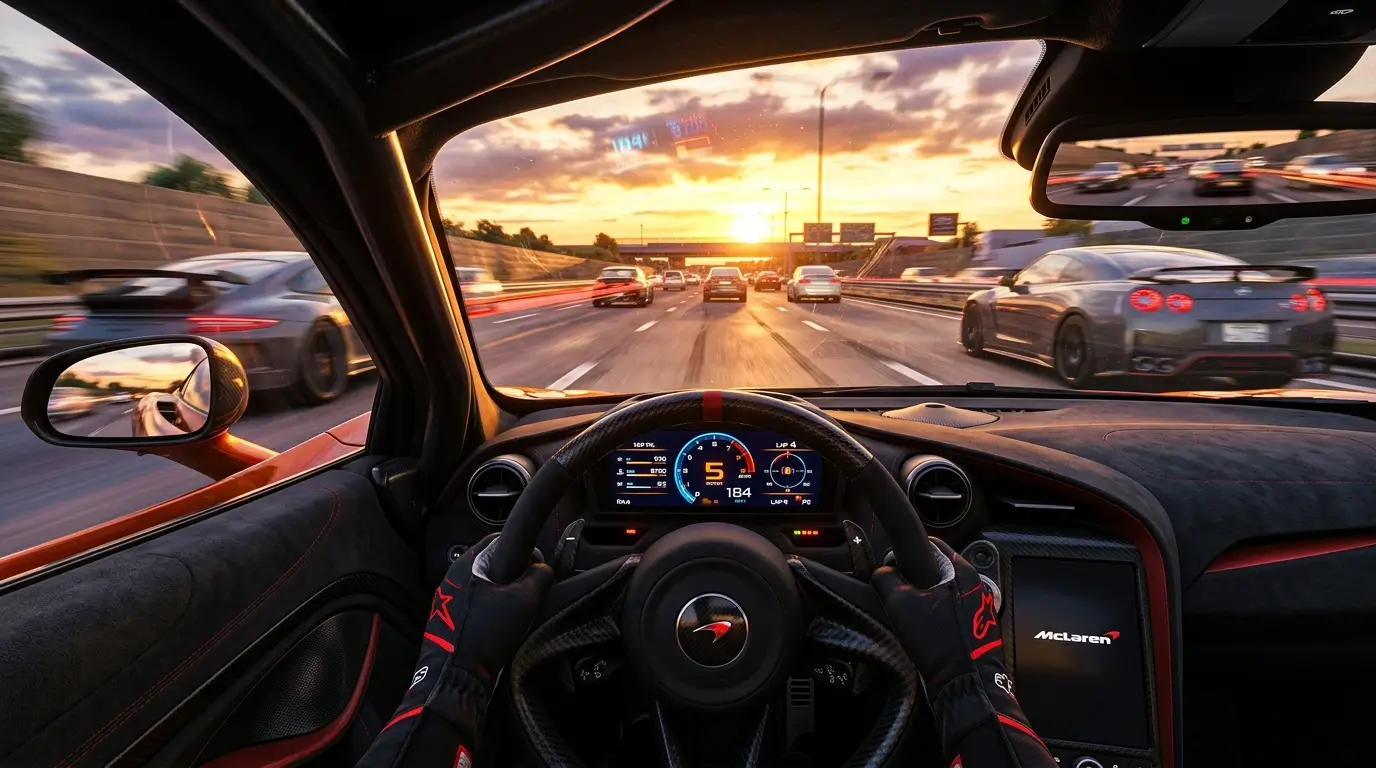
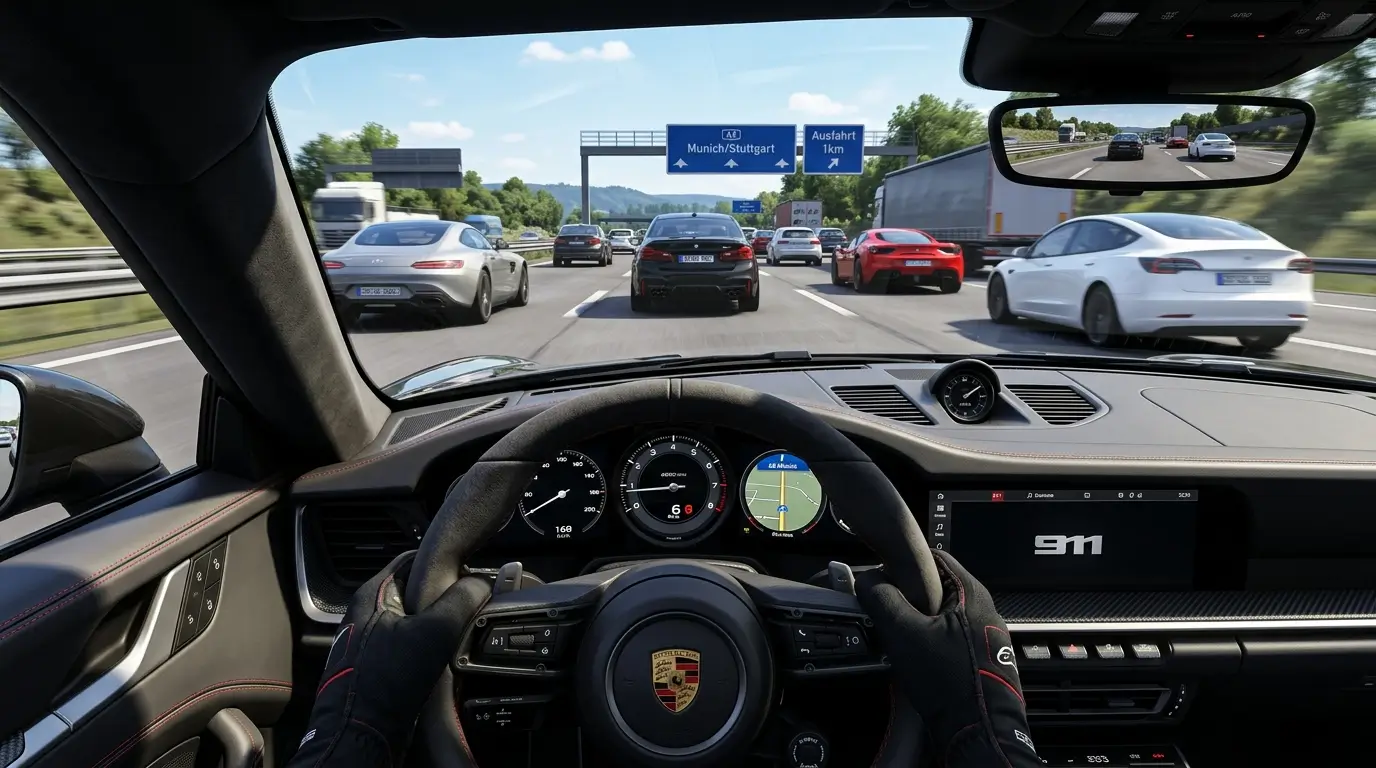
If you have spent any time with mobile racing games, you already know that the overwhelming majority use a third-person camera — your car sits in the center of the screen and the world moves around it. Racing in Car 2 throws that out entirely. The moment you start a session, you are looking through the windshield at the road ahead. The steering wheel is visible in front of you. The dashboard details are rendered with enough accuracy that glancing down feels natural. Side mirrors sit in the corners of your view.
This perspective shift changes everything about how the game feels. When a slow-moving vehicle appears in your lane and you have less than a second to react and swerve around it, the first-person view makes that moment genuinely tense in a way that a top-down or behind-car angle simply cannot replicate. You are not watching a car avatar avoid a collision — you are the driver making that split-second decision. The distinction sounds minor until you feel it, and then it becomes hard to go back to third-person racers without noticing what they are missing.
Cockpit Detail and Immersion
The cockpit itself is one of Racing in Car 2’s best assets. Different cars in the game’s roster each come with a distinct interior, so switching vehicles is not just a performance change — it changes what you are looking at during every session. The steering wheel, dashboard layout, and interior trim vary between vehicles in ways that reward players who take time to notice the details rather than just treating cars as interchangeable speed tools.
The surrounding environment — roads, traffic vehicles, lighting conditions — is rendered with enough quality to maintain immersion during extended sessions. Highway sections feel appropriately wide and threatening when traffic density picks up. The game does not feature weather variations or day-night cycles across sessions, but lighting shifts between different location environments give the visual experience enough variety to stay fresh.
Controls: Tilt Steering Done Right
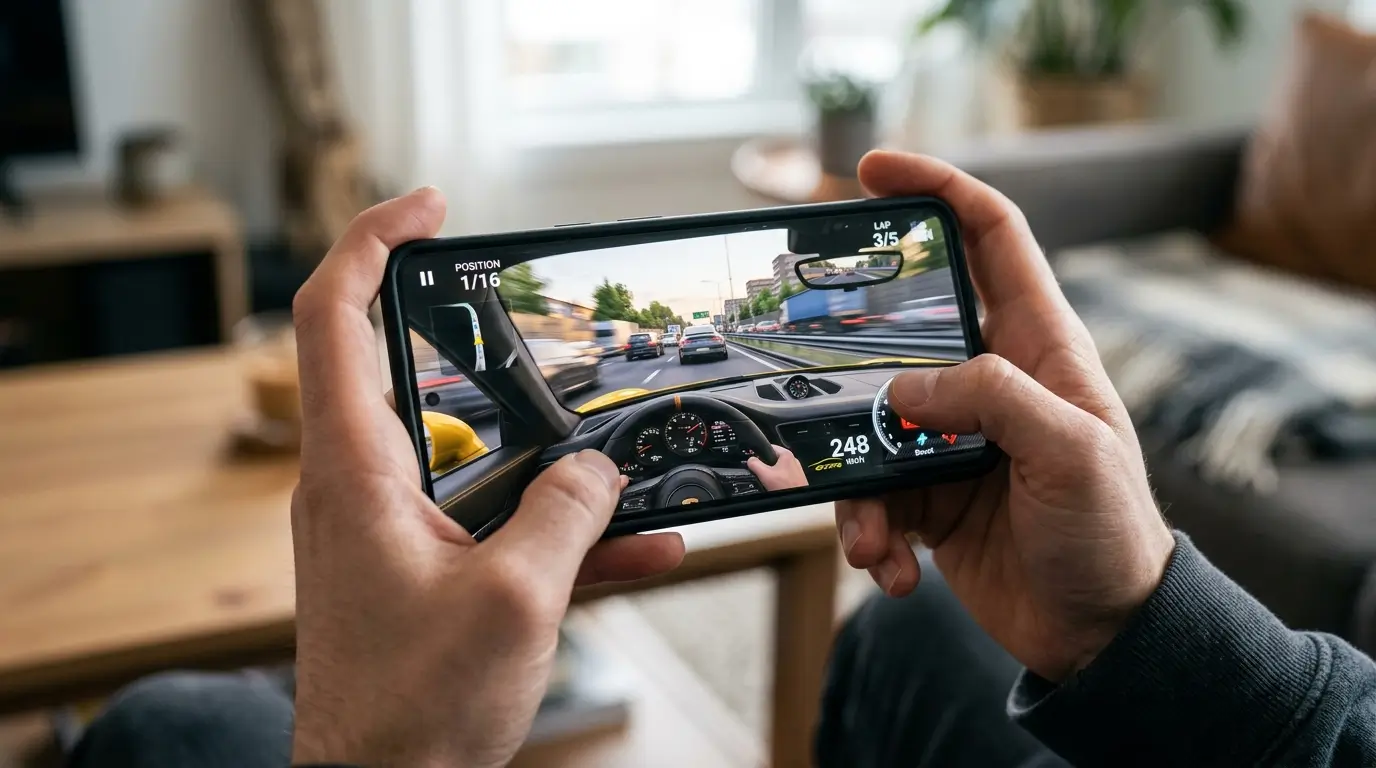
Tilt controls have a complicated reputation in mobile gaming. Done poorly, they are imprecise, exhausting, and frustrating. Done well, they create an organic connection between the player’s physical movement and the action on screen that button controls cannot match. Racing in Car 2 sits firmly in the well-done category.
The tilt sensitivity in this game is calibrated in a way that feels considered rather than default. Small tilts produce small steering adjustments, which matters enormously when you are threading through a gap between two trucks at high speed. Larger tilts produce more aggressive turns for situations where you need to change lanes quickly. The responsiveness scales with input in a way that feels natural after a few minutes of play, even for players who typically prefer on-screen button controls in racing games.
Control Options
| Control Type | Description | Best For |
|---|---|---|
| Tilt Steering | Tilt device left or right to steer | Immersive, natural feeling driving |
| Touch Buttons | On-screen left and right tap zones | Players who prefer fixed input |
| Simulator-like Feel | Progressive steering response to tilt angle | Precision overtakes at high speed |
One thing that players new to the game should know: tilt sensitivity is adjustable in the settings menu. The default sensitivity works well for most players, but if you find early sessions either too twitchy or too sluggish to respond, spending two minutes adjusting the sensitivity slider before your next run makes a noticeable difference. Most experienced players settle on a sensitivity that allows quick lane changes without the car feeling like it overreacts to small movements.
Cars in Racing in Car 2: The Full Roster
Racing in Car 2 offers a selection of cars spanning different speed tiers and performance profiles. Each vehicle is unlocked using coins earned through gameplay, and the progression from starter cars to higher-tier vehicles forms the core of the game’s long-term engagement loop. The cars are not just cosmetic swaps — each one handles differently, sits at a different base speed, and comes with its own cockpit interior that changes the visual feel of your sessions.
Vehicle Tiers Overview
| Tier | Vehicle Type | Speed Profile | Handling | Best Session Type |
|---|---|---|---|---|
| Starter | Standard sedan | Moderate | Stable, forgiving | Learning traffic patterns, coin farming |
| Mid-tier | Sports coupe | Fast | Balanced | Score building, consistent long runs |
| High-tier | Performance sports car | Very fast | Responsive, requires skill | Leaderboard runs, high-score attempts |
| Premium | Supercar / exotic | Maximum | High speed, tight margins | Advanced players, risk-reward runs |
The risk-reward dynamic in the car selection is genuine. Higher-tier vehicles produce higher coin earnings per kilometer because the game rewards speed — faster cars passing traffic at closer range and higher velocity earn more per successful overtake. But faster cars also give you less reaction time when traffic appears. A slower starter car gives you more space to think and react, which matters a lot during the early part of learning to read the traffic flow.
How Each Car Feels Differently
Beyond speed numbers, the character of each vehicle changes your session experience in ways that matter. Starter sedans feel stable and predictable, which makes them excellent for building long uninterrupted runs. Sports coupes sit at a middle ground where speed and control are balanced, and most experienced players find themselves returning to this tier for solid scoring sessions. High-performance cars demand that you have already internalized the traffic patterns well enough to react before you consciously think about reacting — they reward experience rather than caution.[INTERNAL LINK: Best Free Racing Games for Android in 2026]
Locations and Environments
Racing in Car 2 is not a single-road game. The game features multiple distinct location environments, each with its own visual character, road layout, and traffic density pattern. Switching between locations is one of the ways the game prevents the endless mode from feeling genuinely endless in a negative sense — each environment brings a fresh visual backdrop and a slightly different traffic challenge.
Location Types
- Urban highway sections with tighter lanes, higher surrounding building density, and denser traffic that punishes lane-change mistakes heavily
- Scenic countryside roads with wider visual spacing that feels more open but can create a false sense of safety at high speeds
- City environments with varied road width, building-lined sections, and traffic patterns that differ meaningfully from open highway play
- Open road sections where the horizon extends further and high-tier vehicle speed feels most impactful and rewarding
Each location produces a different psychological rhythm during play. Urban sections demand constant attention because the visual information density is high — there is always something happening in your peripheral view. Open road sections let you breathe and build speed, but that comfort can become complacency if you stop scanning the road ahead. Rotating between locations across sessions keeps the game feeling varied in a way that pure mode variety cannot achieve on its own.
Scoring System and Global Leaderboards
Racing in Car 2 runs an endless game mode, meaning there are no finish lines, no lap counts, and no missions in the traditional sense. The only goal is to drive as far as possible, as fast as possible, without crashing. Your performance translates into a score that posts to global leaderboards, which is where the game’s competitive layer lives.
How the Scoring Works
Coins and score accumulate based on several factors during a run:
- Distance covered — the foundational scoring element; the further you drive, the more you earn
- Speed maintained — higher average speed during a run multiplies earnings per kilometer
- Close overtakes — passing traffic with minimal clearance rewards additional coins, creating a risk-reward incentive to push proximity limits
- Vehicle tier — higher-tier cars produce higher coin earnings at equivalent distances, incentivizing progression through the car roster
The close-overtake mechanic is where experienced players separate themselves from casual ones on the leaderboard. Squeezing through gaps that a conservative driver would avoid not only scores more per pass but also builds a momentum to the session that feels genuinely thrilling. The margin for error is razor thin, and that tension is what makes a good leaderboard run memorable.
Step-by-Step: How to Build Your First High Score Run
- Open the settings menu and calibrate tilt sensitivity before your session. Most players find a mid-range sensitivity setting that allows quick responses without overshooting lanes works best for score building.
- Start with a mid-tier vehicle rather than your fastest car. The additional reaction time gives you room to read traffic patterns and find the rhythm of a long uninterrupted run.
- Choose a location you have already spent time in. Familiarity with a location’s traffic density and road layout lets you anticipate gaps rather than react to them, which extends run length significantly.
- Maintain a consistent lane position in the center of the road rather than hugging either side. Center positioning gives you equal reaction distance to traffic appearing from both sides.
- Focus on reading three to four cars ahead rather than reacting to the vehicle directly in front of you. Experienced players process traffic flow at a longer look-ahead distance, which gives more time to plan lane changes.
- Use close-proximity passes deliberately rather than avoiding traffic entirely. Each near-miss overtake earns bonus coins that compound over a long run into meaningful score differences on the leaderboard.
- After building confidence with mid-tier cars, switch to your highest unlocked vehicle for dedicated leaderboard attempts. The speed increase demands more skill but produces the scores that actually move your leaderboard position.
Graphics and Sound: What to Expect
Racing in Car 2 is not the most visually complex game on the mobile market, and it does not try to be. The visual priority is clarity and immersion within the cockpit view rather than environmental complexity. Vehicle models are detailed enough that individual cars feel distinct, and the cockpit interiors are rendered with care that shows when you spend time in them. Road surfaces and surrounding environments are clean and readable, which is actually more important in a fast-paced traffic racer than decorative detail — you need to see what is ahead clearly at all times.
The sound design supports the experience without overcomplicating it. Engine notes change appropriately with speed, creating an audio cue for how fast you are actually moving that becomes a useful piece of information during sessions where visual speed can be harder to judge. Traffic sounds — horns, the whoosh of passing vehicles — add to the immersion without cluttering the audio space. It is functional sound design that serves the gameplay rather than competing with it.
Performance Across Devices
One of Racing in Car 2’s genuine strengths is how well it runs across a wide range of devices. Unlike graphically demanding titles that require recent hardware to run smoothly, this game maintains stable frame rates on mid-range and older Android and iOS devices without requiring settings adjustments. For players who do not own a high-end phone, this is a meaningful advantage over competing racing titles that stutter or reduce visual quality on older hardware.
Progression and Monetization: Is It Fair?
Racing in Car 2 is free to download and the core gameplay loop is fully accessible without spending money. Coins earned through standard gameplay unlock the car roster progressively, and the game does not wall off key content behind mandatory purchases. That said, the coin earning rate in the early game is deliberately measured, which means unlocking mid-tier and high-tier vehicles through free play requires consistent session time.
| Progression Method | Speed | Cost | Best For |
|---|---|---|---|
| Standard gameplay (free) | Gradual | Free | Patient players who enjoy the grind |
| Close-overtake focus | Faster than average | Free | Players willing to take calculated risks |
| High-tier vehicle early | Immediate | Optional in-app purchase | Players who want to skip progression |
| Ad watching (optional) | Moderate boost | Free (time cost) | Players who want faster progression without spending |
The in-app purchases in Racing in Car 2 are optional and do not create a pay-to-win dynamic on the leaderboards in a meaningful sense. A high-tier vehicle does earn coins faster, but leaderboard position ultimately depends on skill — specifically the ability to maintain long, fast, close-proximity runs. No amount of spending replaces the ability to read traffic flow and make good split-second decisions. The purchases accelerate access to higher-tier cars but do not substitute for driving ability.[INTERNAL LINK: Top Endless Racing Games for Android and iOS — 2026 Ranked List]
Racing in Car 2 vs. Similar Mobile Traffic Racers
| Feature | Racing in Car 2 | Traffic Rider | Traffic Racer |
|---|---|---|---|
| Vehicle Perspective | First-person cockpit | First-person (motorcycle) | Third-person |
| Vehicle Type | Cars only | Motorcycles only | Cars only |
| Cockpit Interior Detail | High — full dashboard visible | Moderate | Not applicable |
| Tilt Controls | Yes, well-calibrated | Yes | Yes |
| Global Leaderboard | Yes | Yes | Yes |
| Offline Play | Yes | Yes | Yes |
| Multiple Locations | Yes | Yes | Limited |
| File Size | Lightweight | Moderate | Lightweight |
Common Mistakes New Players Make in Racing in Car 2
- Not calibrating tilt sensitivity before the first session. The default sensitivity works for many players but not all. Spending two minutes adjusting it before your first proper run prevents a session of imprecise steering from creating bad habits that persist after the adjustment.
- Using the fastest available car immediately. Jumping straight to a high-tier vehicle before understanding traffic patterns produces short runs and minimal coin earnings. Building distance and score with a mid-tier car while learning the traffic flow is how experienced players actually progress faster, not slower.
- Avoiding close overtakes entirely. Playing too conservatively — giving every traffic vehicle a wide berth — sacrifices the bonus coins from near-miss passes. Those bonus earnings compound over a run into significant score differences. Learning to judge safe close-proximity passes is a core skill, not an optional one.
- Focusing on the car directly ahead instead of reading further down the road. Reacting only to the nearest vehicle does not give enough time at high speeds to make smooth, controlled lane changes. Experienced players look several vehicles ahead and plan moves before they become urgent.
- Ignoring location variety. Staying on the same location every session limits the benefit of the game’s environmental variety and means you are not building familiarity with traffic patterns that appear in other environments. Different locations reward different pacing and risk tolerances.
- Not checking the leaderboard between sessions. The global leaderboard is a major motivation driver in this game. Checking your rank after a strong session and identifying the gap to the next tier of players gives sessions a specific goal, which improves focus and run quality.
Pro Tips for Racing in Car 2
- Treat the steering wheel visible in the cockpit as a control indicator, not just decoration. The wheel animation corresponds to your steering input, and during intense traffic moments, a quick glance at it can confirm whether your tilt is registering correctly or if you need to adjust your hold.
- For maximum coin efficiency on a free-to-play progression path, focus sessions on the mid-tier sports coupe at its highest available upgrade state. This combination produces the best balance of speed, stability, and close-overtake earnings without the crash risk of premium vehicles.
- During a high-score run, choose your entry gaps rather than committing to the first available space. Traffic flow in Racing in Car 2 has rhythm — certain vehicle clusters open and close at predictable intervals. Patience in selecting a gap rather than forcing one prevents unnecessary near-crashes that end runs prematurely.
- Use the road’s center line as a positional anchor. Experienced players maintain their car within one lane width of center at all times unless actively making a pass. This discipline keeps your reaction options open on both sides and prevents the incremental drift toward road edges that ends many long runs.
- Play a warm-up run at a deliberately lower speed before a serious leaderboard attempt. The first session of the day is rarely the cleanest — muscle memory for tilt sensitivity and traffic pattern reading needs a few minutes to sharpen. A throwaway run where you focus purely on smooth steering and clean overtakes sets the timing for a better score run immediately after.
- Learn the visual cues that indicate traffic density increases are coming. As a run extends, traffic volume typically grows. The visual cue of approaching a tighter cluster several seconds ahead is your signal to reduce speed slightly and plan a careful path through rather than attempting to maintain maximum speed through the dense section.
Frequently Asked Questions About Racing in Car 2
Is Racing in Car 2 free to play?
Yes. Racing in Car 2 is free to download on both Android and iOS. The game includes optional in-app purchases for coins and car unlocks, but the full gameplay experience including all locations, the endless game mode, and global leaderboard access is available without spending money.
Can you play Racing in Car 2 offline?
Yes. Racing in Car 2 is fully playable offline. All driving sessions, car unlocks, and coin earnings work without an internet connection. An internet connection is required only to post scores to the global leaderboard and access any online features.
How many cars are in Racing in Car 2?
Racing in Car 2 features a selection of vehicles spanning multiple performance tiers from starter sedans to premium supercars. Each car has a distinct cockpit interior, handling characteristic, and speed profile. Cars are unlocked progressively using coins earned through gameplay.
What makes Racing in Car 2 different from other racing games?
The defining feature is the first-person cockpit view, which places the player inside a detailed car interior with a visible steering wheel and dashboard. Combined with tilt steering controls and an endless traffic format, this creates an immersive experience that feels distinctly different from standard third-person mobile racers. The close-proximity overtaking system that rewards risk-taking near traffic is also a key distinguishing mechanic.
Is Racing in Car 2 good for beginners?
Yes. The game is specifically designed to be easy to learn, with tilt controls that feel intuitive within minutes of play and an endless mode that removes the pressure of defined objectives. Beginners benefit from starting with lower-tier vehicles that provide more reaction time while learning to read traffic flow, then progressing to faster cars as skill develops.
How do you earn coins faster in Racing in Car 2?
Coins accumulate faster by maintaining higher speeds throughout a run, using higher-tier vehicles, and deliberately taking close-proximity overtakes that trigger bonus coin awards. Longer uninterrupted runs compound all three factors, so improving run consistency — rather than simply driving faster — is the most reliable path to faster progression.
Does Racing in Car 2 have multiplayer?
Racing in Car 2 does not feature live head-to-head multiplayer sessions. The competitive element comes through the global leaderboard system, where your best scores are posted and ranked against players worldwide. This asynchronous competition format lets you race for rank on your own schedule without requiring a real-time opponent.
Final Verdict: Is Racing in Car 2 Worth Playing in 2026?
After spending serious time behind the wheel in this Racing in Car 2 review, the answer is yes — and the reasoning is straightforward. This game does not try to be everything. It picks one core mechanic, the first-person cockpit traffic racer, and executes it with a level of polish and feel that explains why over 300 million players have downloaded it.
The cockpit view is as good as anything the mobile platform offers in this format. The tilt controls are calibrated well enough that skill genuinely translates into better scores. The car roster provides enough progression to keep sessions purposeful. The global leaderboard gives long-term players a competitive reason to keep improving. And the whole package runs smoothly on a wide range of devices without demanding high-end hardware.
Where it shows limits: the game could benefit from more location variety, weather conditions, or mission-based content to supplement the endless mode for players who eventually want more structure. After long-term play, the core loop can settle into a familiar rhythm that some players will find repetitive. But those are criticisms of a game that has already delivered its value clearly and honestly — a focused, well-crafted, genuinely immersive mobile racing experience.
If you have never tried it, download it today and spend the first ten minutes adjusting your tilt sensitivity and learning the traffic flow on your first location. After that, the game takes care of keeping you engaged all by itself.
DISCLAIMER: This article is for informational and entertainment purposes only. Racing in Car 2 is developed and published by its respective developers. All in-game features, vehicle details, and gameplay mechanics mentioned are based on community gameplay experience and publicly available information at the time of writing, and may change with official game updates. apk5star.com is not affiliated with or endorsed by the developers or publishers of Racing in Car 2.